
EXECUTIVE GUIDE
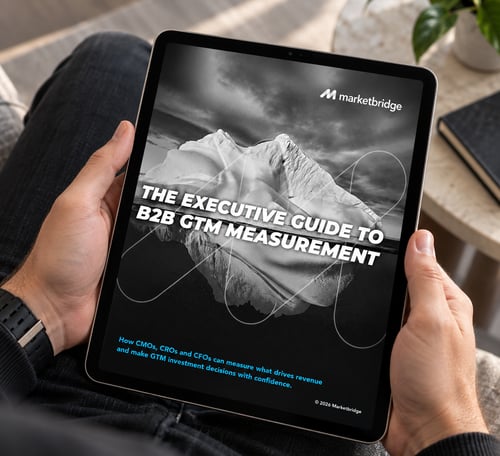
The Executive Guide to B2B GTM Measurement
How CMOs, CROs and CFOs can measure what drives revenue and make GTM investment decisions with confidence.
Growth leaders are under more pressure to defend investment across brand, demand, sales, partner and customer growth.
The challenge is that most B2B measurement systems still reflect what individual platforms and functions can easily track. That makes it harder to see how the full GTM system contributes to revenue, where spend is paying off and what should change next.
This executive guide lays out a new standard for B2B measurement built around how growth actually happens.
What Better B2B Measurement Requires
Measure the System, Not the Silos
Understand how the brand, demand, sales and partner activity contribute across different stages and timelines.
Start Where B2B Growth Happens
Connect buying-group engagement, account activity, opportunity progression and revenue over time.
Measure Incremental Contribution
Focus on what would not have happened without the investment and eliminate duplicated revenue credit.
Turn Measurement Into Investment Guidance
Give leaders a clearer basis for deciding what to protect, reduce, scale or rebalance.
"When measurement guides decisions, it becomes part of how GTM is run. That requires connected data, credible models, a decision framework and an operating rhythm leaders can use repeatedly.”

B2B Growth Needs a New
Measurement Standard
B2B leaders have more data than ever, but still struggle to answer the questions that matter most: What drove revenue? What would have happened anyway? Where should the next dollar go?
The Executive Guide to B2B GTM Measurement shows what a more credible standard looks like.
The Pressure on Growth Investment
Has Changed
Growth leaders are being asked to defend investment across brand, demand, sales and customer growth. That requires more than reporting what happened. Leaders need to know what to protect, scale, reduce or redirect.
The Money Question Has Changed
-
Before: What did marketing do?
-
Now: What revenue would not have happened without this investment?
-
Next: Where should the next dollar go?
We Don't Need More Dashboards.
We Need More Confidence.
Marketing, Sales, Finance and individual platforms often bring different versions of performance. Better measurement gives leadership one shared basis for understanding what drove results and where to invest next.
Dashboard ≠ Measurement System
- Dashboard = Interface
- Data = Foundation
- Models = Logic
- Framework = Decisions
- Optimization = Operating rhythm
The Old Standard Was Built Around the Wrong Unit of Truth
Traditional attribution starts with leads, touches, channels and platform-reported conversions. But B2B growth happens across buying groups, accounts and interactions over time. Measurement needs to reflect that reality.
Old Standard
- First touch
- Last touch
- Platform credit
- Lead handoffs
New Standard
- Account-level visibility
- Incremental contribution
- No double-counting
- Investment guidance
What Does the New Standard of Measurement Look Like?
Better B2B measurement requires a different way of connecting GTM activity to revenue and using that evidence to make investment decisions.
The executive guide shows how leaders can move from fragmented attribution toward a measurement system built around how B2B growth really happens.
Inside the guide you’ll find:
- The principles behind the new measurement standard
- How brand, demand and sales fit into one measurement system
- What credible revenue contribution should mean
- Four practical steps leaders can take now